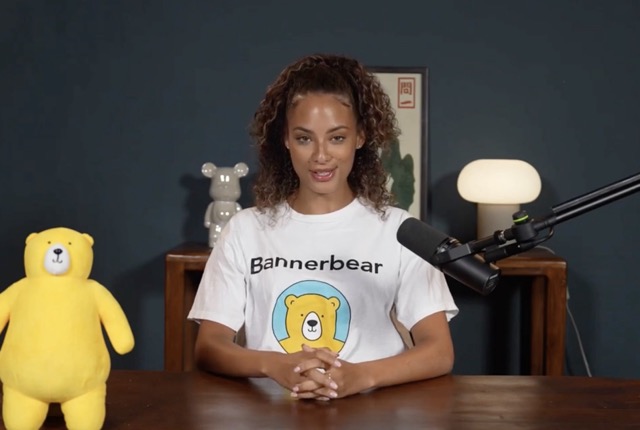
What's the difference between a Webhook and an API — and when should you use one over the other? In this video, we break it down clearly and walk through a real-world example using Bannerbear so you can see both in action.
Here's what we cover:
✅ What an API is and how the request-response model works
✅ What a Webhook is and how the push model works
✅ A live demo using Bannerbear's image generation API
✅ How to use a Webhook URL to receive results automatically
✅ Key differences: who initiates, timing, and best use cases
By the end, you'll know exactly which one to reach for — and why.
🔗 Try Bannerbear: https://bannerbear.com (https://bannerbear.com/)
If this helped clear things up, give it a like and subscribe for more tutorials! Got a question? Drop it in the comments 👇
Video Transcription
[00:00:00] Hey everyone, welcome back. So here's a question that gets asked a lot: what's the difference between a webhook and an API? And when should I actually use one over the other? If you've ever felt like these two terms get thrown around interchangeably, but mean completely different things, you're not wrong, and you're not alone.
In this video, we're going to explain what each one actually is and how they work differently, and walk through a real-world example using a tool called Bannerbear to see both in action. By the end, you're going to have a crystal clear idea for both, and you know exactly which one to reach for in any situation.
Let's get into it. Let's start with APIs, because they're the foundation. API stands for application programming interface. At its core, it's a communication method between two pieces of software. One
[00:01:00] system exposes a set of endpoints, and another system calls those endpoints to request or send data. A simple way to picture this is to think of an API like a waiter at a restaurant.
You tell the waiter what you want, the waiter goes to the kitchen, gets it, and brings it back to you. If you're using an API, your app is the customer, the API is the waiter, and the server is the kitchen. You ask, it responds. So let's look at a real example using Bannerbear. Bannerbear lets you auto-generate images from templates, like social media images, open graph images, and certificates, and it exposes a clean REST API to do this.
Here's the endpoint trigger image generation. I send a request with my template ID, my API
[00:02:00] key in the authorization header, and a modifications array- That is where I pass in the dynamic content like text or images I want placed into my template. Now, here's an important thing to take note of
Bannerbear responds immediately with a 202 accepted, but the image isn't ready yet. The status is pending, and the image URL field is nil. So what do you do next? You have to come back and ask. In the get request to this endpoint, you pass in the UID you got from the first response, and you keep polling it until the status flips to completed and the image URL is populated.
This is the classic pull model. Your app is in control, and it decides when to check for the result. However, this isn't ideal for high volumes of
[00:03:00] images or time-sensitive workflows, as you have to keep polling the API endpoint, asking, waiting, and asking again. All right, now let's flip the model completely.
A webhook is sometimes called a reverse API, and that nickname actually explains it really well. Instead of your app going and asking for data, the server comes and tells your app when something is ready. If an API is you refreshing your email inbox every 30 seconds waiting for a response, a webhook is getting a push notification the second the reply lands.
You'll get notified when something happens. Remember that POST request we made earlier? Bannerbear actually supports an optional webhook URL parameter right in the same request body. When Bannerbear finishes rendering the image, it automatically fires a POST request to that webhook
[00:04:00] URL and sends you the full image object, including the image URL.
Let me show you. I'm using webhook.site. It gives me a temporary URL to receive incoming payloads. I'll fire the image generation request with that URL included as the webhook URL.
There it is. When the image generation is done, the payload arrives automatically with the completed image URL. This is the push model. The server pushes data to you the moment an event occurs with no polling loop required. Now that we've seen both in action, let's step back and lock in the key differences between APIs and webhooks in general.
There are three things to remember: who initiates the communication, how they handle timing, and what each
[00:05:00] one is best suited for. Who initiates? With an API, your application initiates. You decide when to make the call and what to ask for. With a webhook, the external service initiates. It reaches out to you when something happens.
Timing. An API gives you data on demand, but only when you ask. If something changes on the server between your requests, you won't know until you ask again. A webhook delivers data the instant the event occurs with no delay. Best fit. APIs work best when your app needs data on its own schedule, like fetching a user profile, querying a list of records, or submitting a form.
Webhooks work best when you need to react to something the moment that it happens on an external system, like a
[00:06:00] payment completing, file finishing, or a new subscriber joining. Take a user profile page as an example. When a user opens your app, you call your back-end API to fetch their account details and render them on screen.
The request happens because the user took an action and needs the data right now. A webhook wouldn't make sense here. There's no external event to listen for. On the flip side, take payment confirmation as an example. When a customer completes a purchase You don't want to keep calling Stripe's API every few seconds asking, "Did the payment go through yet?"
Instead, Stripe fires a webhook to your server the moment the payment succeeds, and you trigger the order confirmation email instantly. Polling would work, but it's wasteful, and there's always a lag. So
[00:07:00] webhook is the better tool for the job. So to wrap it up, APIs are your request response tool. You're in control.
You ask, you get data. Webhooks are your event-driven listeners. The server reaches out to you the moment something happens. And when to use each? Whenever you're in control of the timing, use an API. Whenever you're reacting to something that happens on an external system at an unpredictable time, use a webhook.
Bannerbear is a perfect real-world example of a service that uses both. You trigger image generation through the API, and you get the result delivered to you automatically through a webhook. If you want to try this yourself, head over to bannerbear.com. You can sign up and start generating images via API today.
The sign-up link is in the description. If this video helped clear things up, please give it a
[00:08:00] like. We really do appreciate it, and I'll see you in the next video.