According to Forbes, the AI market is projected to reach a staggering $1,339 billion by 2030. The use of AI is not just for question-and-answer in the chat anymore. With AI agents, you can do more: they can book meetings, triage support tickets, write code, and coordinate with other agents to get multi-step work done with barely any human babysitting.
In this article, we'll go through the 9 best AI agent builders in 2026, what each one is good at, and which one you should use.
What Is an AI Agent Builder?
An AI agent builder is a platform (or framework) that lets you create autonomous AI agents capable of making decisions and taking multi-step actions across your tools. Unlike a basic chatbot that follows a fixed script, an agent can access other tools outside of its LLM model to complete tasks like sending emails, scheduling meetings, handling CRM, and even work with another AI agent.
Broadly, these platforms fall into three categories:
- No-code/visual builders : Build AI agents using plain English or a drag-and-drop UI. Great for non-engineers.
- Developer frameworks : Python or TypeScript libraries that give you maximum control over agent architecture, memory, and orchestration.
- Enterprise platforms : the same agent capabilities wrapped in SSO, audit logs, compliance certifications, and a support contract.
With that context, let’s see what are the top 9 AI agent builders in 2026…
Top 9 AI Agent Builders in 2026
1. n8n
n8n started as an alternative to Zapier and has grown into one of the most popular platforms to orchestrate AI agents, blending traditional workflow automation with agentic reasoning.
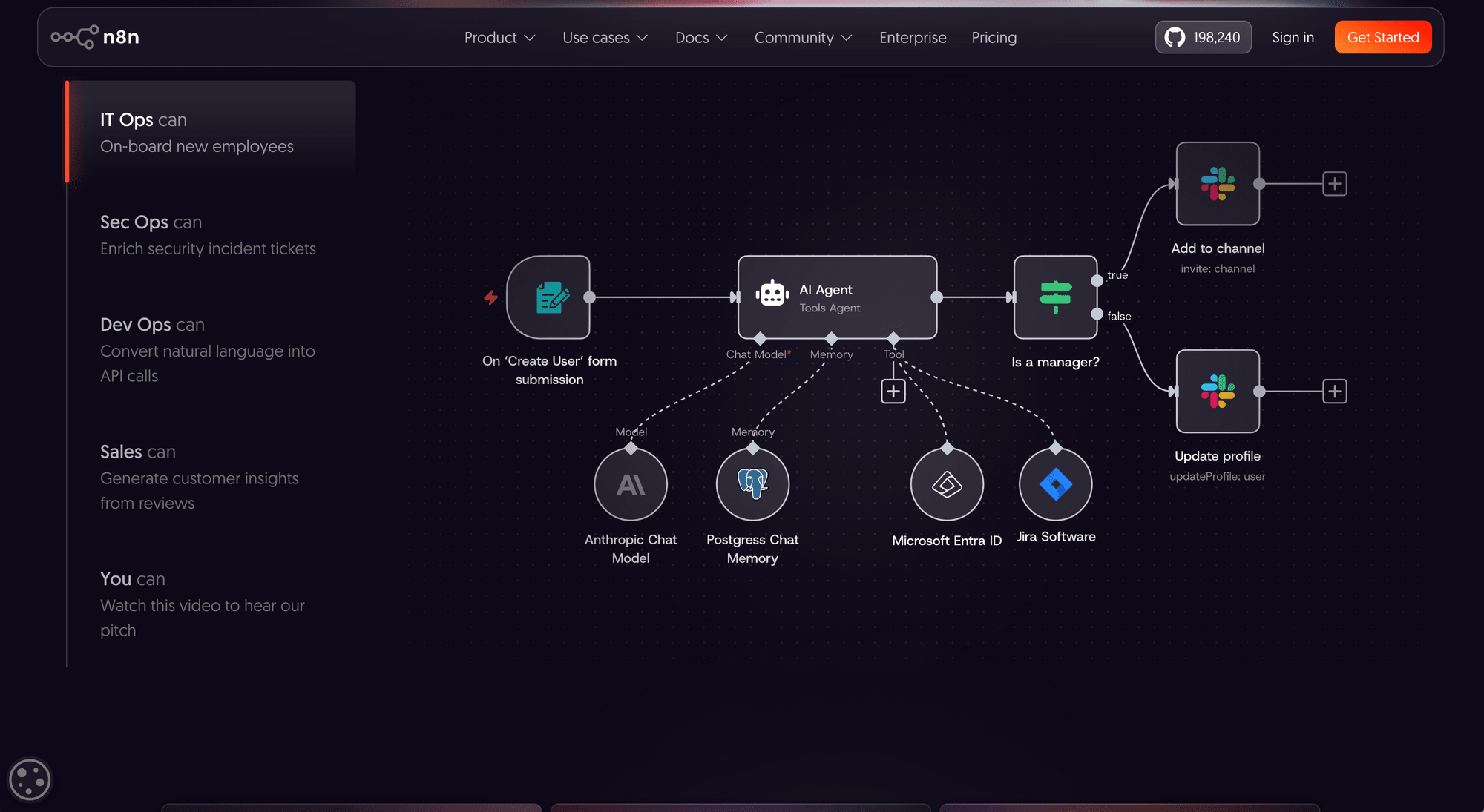
n8n supports multiple AI models from OpenAI, Anthropic, Gemini, and also local models. It supports self-hosting, and has a dedicated AI Agent node that can be plugged straight into your existing workflows.
Key features:
- Self-hostable (with cloud option if you'd rather not manage servers)
- Dedicated AI Agent node that plugs into existing workflows
- Multi-model support (OpenAI, Anthropic, Gemini, local models)
- 400+ app integrations
- Visual canvas with the option to drop into JavaScript/Python code nodes when needed
2. Make
Make (formerly Integromat) is another visual AI automation platform, with a focus on its Scenario Builder. With over 3000 app integrations, it lets operations, marketing, and revenue teams ship production automation workflows without any technical barrier.
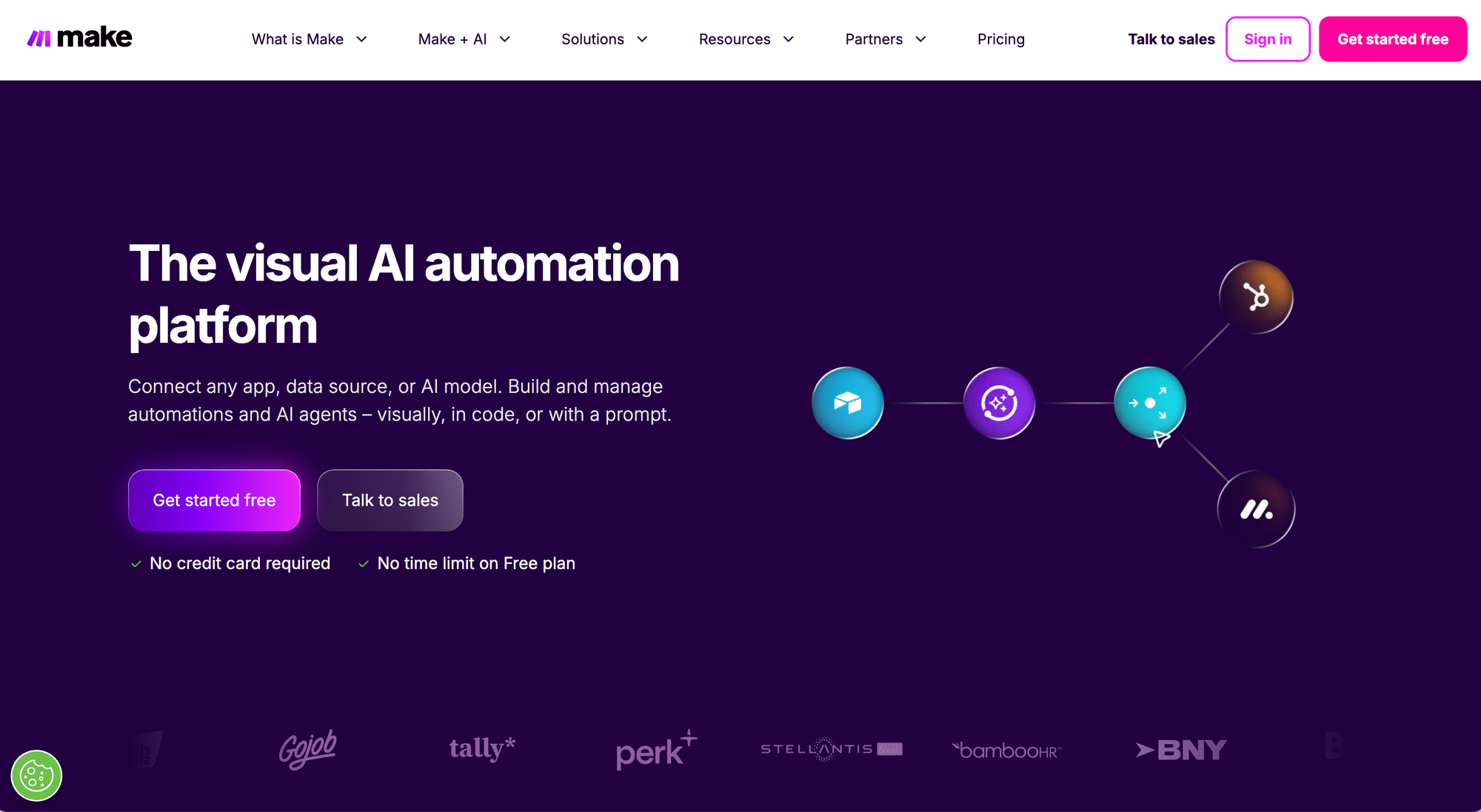
Make’s visual canvas, Scenario Builder is modular and these are the modules you can snap together: Router for branching logic, Iterator for looping through a list of items one at a time, Aggregator for collapsing those items back into a single output, and Set Variable for holding state across the scenario.
However, Make doesn't offer self-hosting. Everything runs on Make's cloud, which could be a dealbreaker if your compliance require keeping workflow data entirely on your own infrastructure.
Key features:
- Visual Scenario Builder with modular agent design
- 3000+ app integrations
- Direct AI provider calls (OpenAI, Anthropic, and more) from within a module
- Error handling and scenario versioning built into the canvas
- Works well for non-engineers while still allowing granular control over logic
3. LangGraph
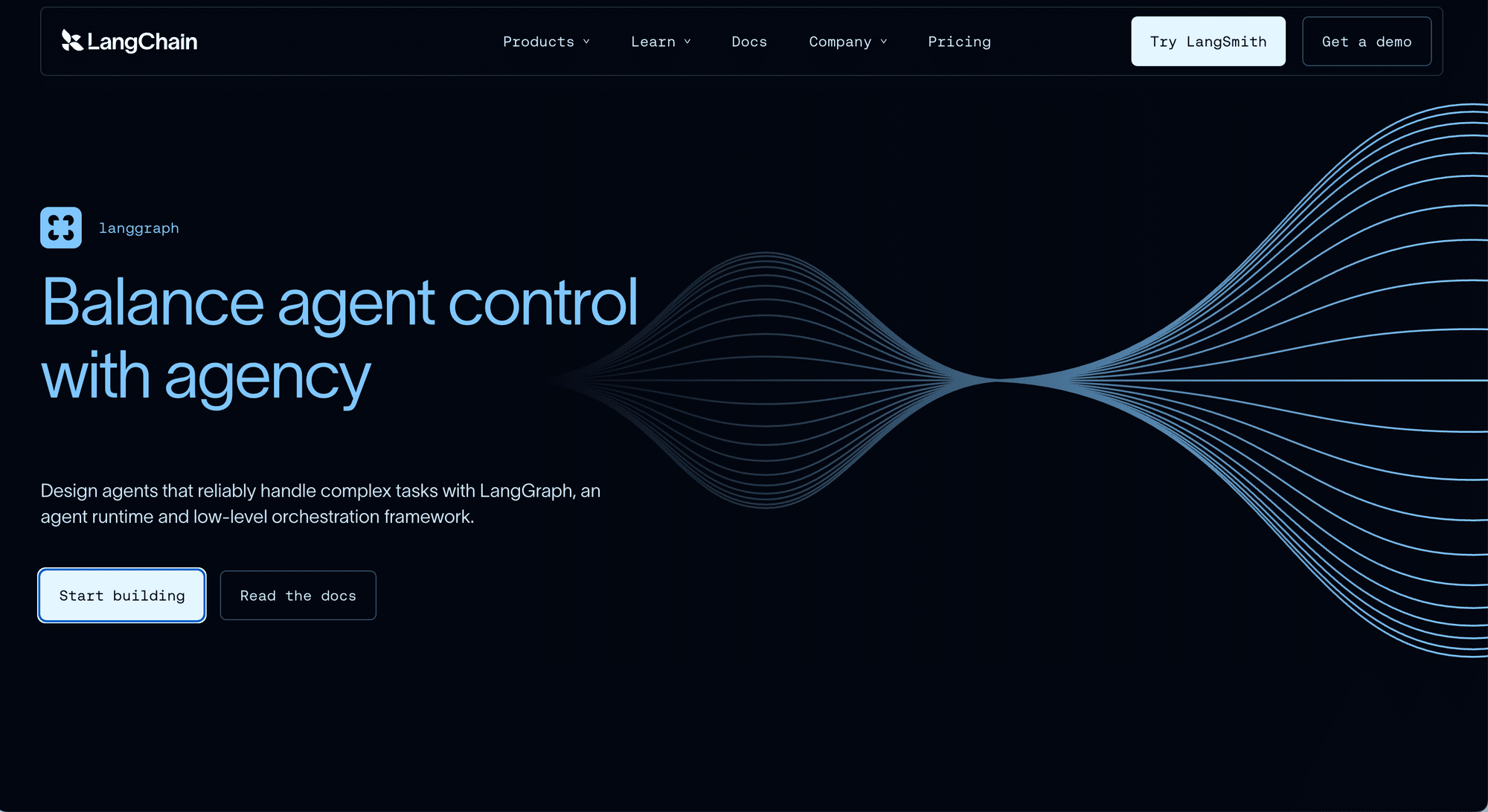
LangGraph, built by the LangChain team, is a framework for constructing agent workflows using a state-graph architecture. Instead of thinking of an agent as a single prompt-response loop, you define nodes (LLM calls, tool calls, conditionals) and edges that describe how state flows between them. This graph-based approach makes LangGraph excel at long-running, multi-step reasoning tasks with backtracking.
Key features:
- State-graph architecture for defining nodes, edges, and conditionals explicitly
- Strong support for long-running, multi-step tasks with backtracking
- Deep integration with the broader LangChain ecosystem (tools, retrievers, memory)
- LangGraph Platform for managed, hosted deployment when you're ready for production
- Fine-grained control over agent state, making it easier to debug complex flows
4. CrewAI
CrewAI is an open source, multi-agent platform that let you define roles for multi-agent orchestration. For example, you might set up a Planner, a Researcher, and a Reviewer, and CrewAI handles the message passing and shared memory between them, letting each agent behave like a “crew”.
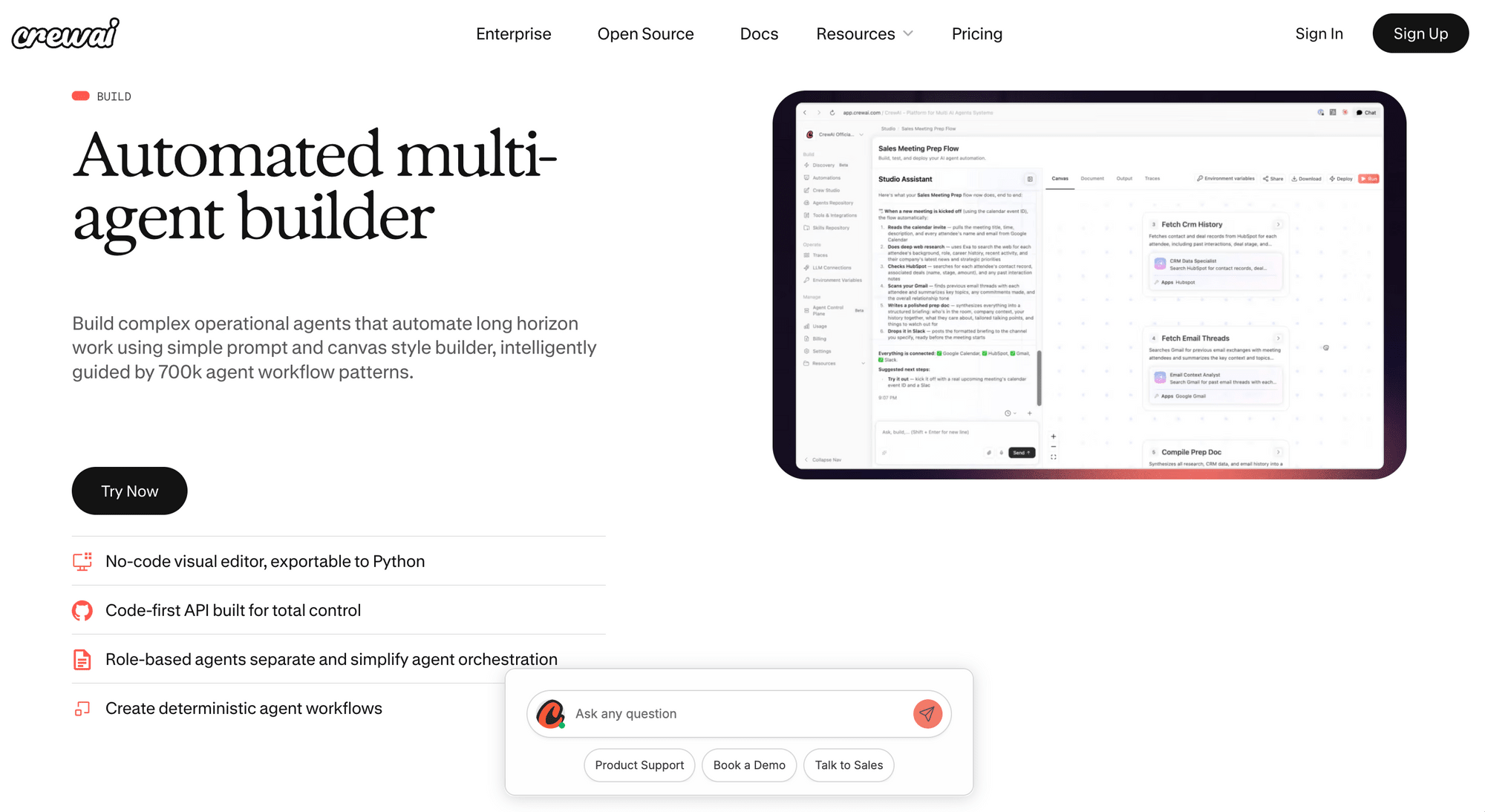
Beside the open-source library, there's also a paid enterprise tier with monitoring, HIPAA and SOC 2 compliance, and hosted deployment if you don't want to manage your own infrastructure. Compared to LangGraph, CrewAI is generally faster to get a working multi-agent up and running, though it trades away some of LangGraph's low-level control.
Key features:
- Role-based agent abstraction (Planner, Researcher, Reviewer, and so on)
- Built-in shared memory and message passing between agents in a crew
- Open-core: free library, paid enterprise tier for compliance and hosting
- HIPAA and SOC 2 compliance available on the enterprise tier
- Persistent agent memory across runs via vector stores
5. Microsoft Copilot Studio
Copilot Studio is Microsoft's guided, largely no-code agent builder, and its biggest strength is how deeply it’s integrated into Microsoft 365 and Teams. Agents can read and write across the Office suite without any custom API work, which is hard to replicate on other platforms.
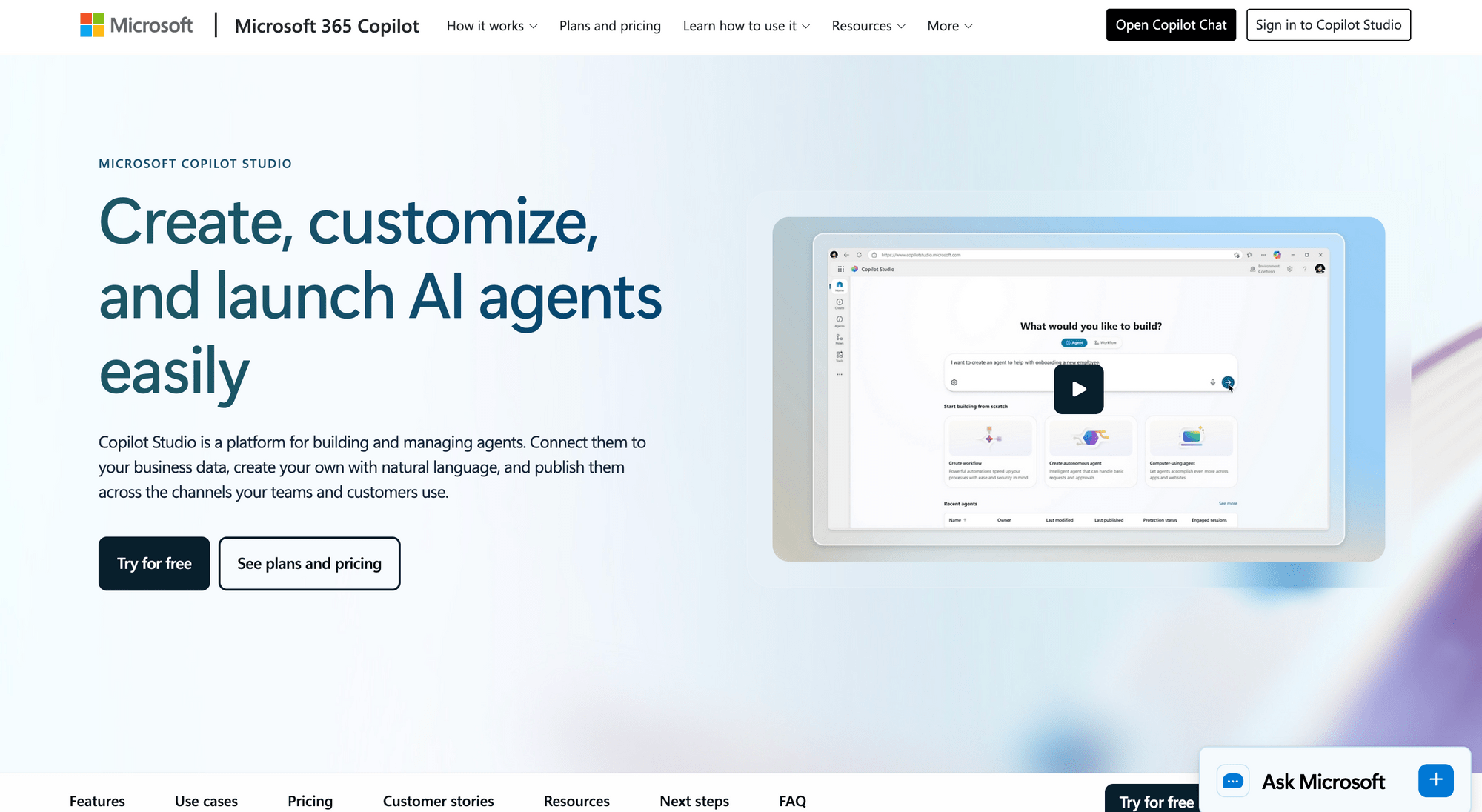
The pricing is tied to Copilot licenses plus metered "Copilot credits", and there's a learning curve if you're not already familiar with Power Platform conventions. However, if your company is already familiar with the Microsoft ecosystem, the integration depth makes this an easy pick over other AI agent builders.
The pricing is tied to Copilot licenses plus metered "Copilot credits", and there's a learning curve if you're not already familiar with Power Platform conventions. However, if your company is already familiar with the Microsoft ecosystem, the integration depth makes this an easy pick over other AI agent builders.
Key features:
- Native read/write access across Microsoft 365 and Teams
- Guided, largely no-code builder with hundreds of Power Platform connectors
- Governance and compliance controls built for regulated enterprises
- Supports both customer-facing and internal copilots
- Pricing tied to Copilot licenses plus metered Copilot credits
6. Google Gemini Enterprise Agent Platform (formerly Vertex AI)
Compared to other platforms on this list, Google’s Gemini Enterprise Agent Platform leans more enterprise. It is Google Cloud's answer for teams that need retrieval-augmented generation (RAG), persistent memory, and compliance baked in from day one, and is tightly integrated with the rest of the GCP stack.
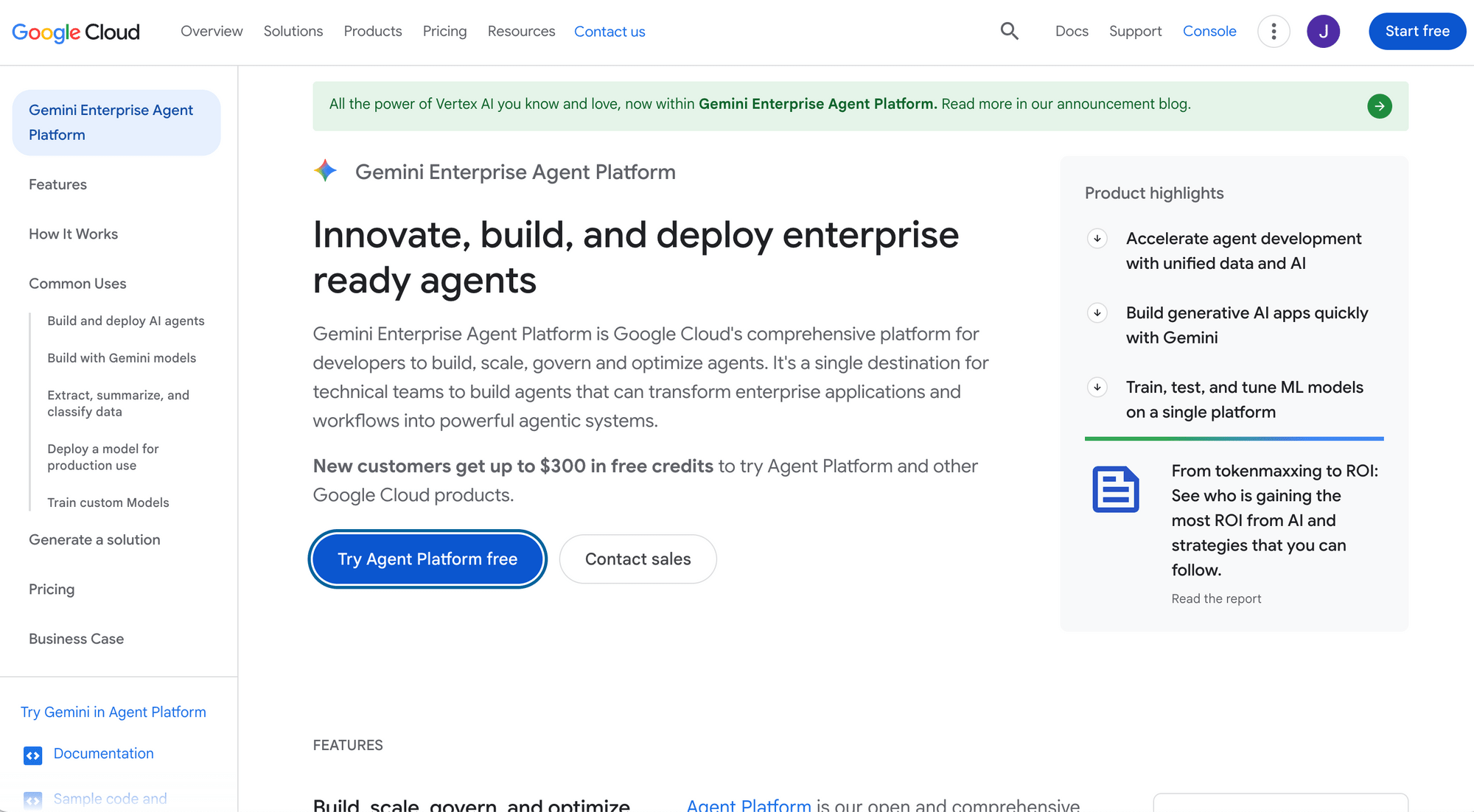
If your data is already in BigQuery or Cloud Storage, this will be an excellent choice. You also get Google's infrastructure and model lineup (including Gemini) natively available to your agents. However, you'll also need some familiarity with GCP's IAM and networking setup to configure things properly.
Key features:
- Native retrieval-augmented generation (RAG) with persistent memory
- Tight integration with BigQuery, Cloud Storage, and the rest of the GCP stack
- Access to Google's Gemini model family out of the box
- Enterprise-grade compliance and data residency controls
- IAM-based access control for governance across large teams
7. OpenAI Agents SDK
OpenAI's Agents SDK is a code-first framework, alongside ChatGPT’s Workspace Agents for building agents through natural language inside the workspace of a Business, Enterprise, Edu, or Teachers plan. It’s available in Python and TypeScript.
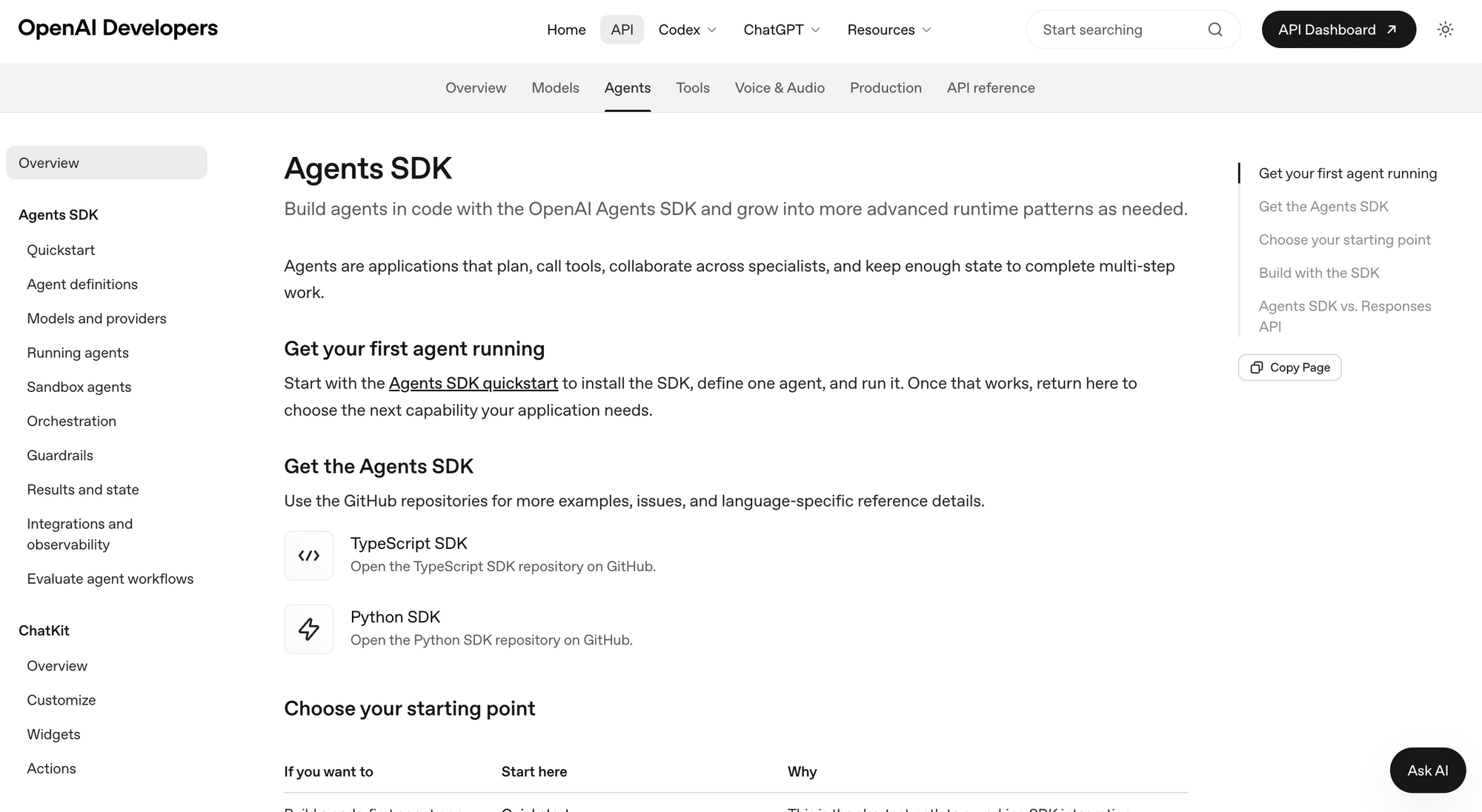
The SDK itself is free, and you pay for the model tokens and any metered tools you call (web search, for example, is billed per call). If you want direct control over tools, MCP servers, and runtime behavior, this could be a good fit.
Key features:
- A code-first framework with Responses API, tool calling, file search, web search, and computer use
- Build agents from natural language and share them across a workspace
- Built-in migration tooling to export an Agent Builder workflow as Agents SDK code
- ChatKit for embedding an agent UI directly into web or mobile apps, unaffected by the old Agent Builder shutdown
8. Gumloop
What sets Gumloop apart from most of the platforms on this list is how teams actually can work together in it. It's a no-code AI agent builder and automation platform that is designed for marketing, sales, operations, finance, and HR teams to collaborate on the same workflows.
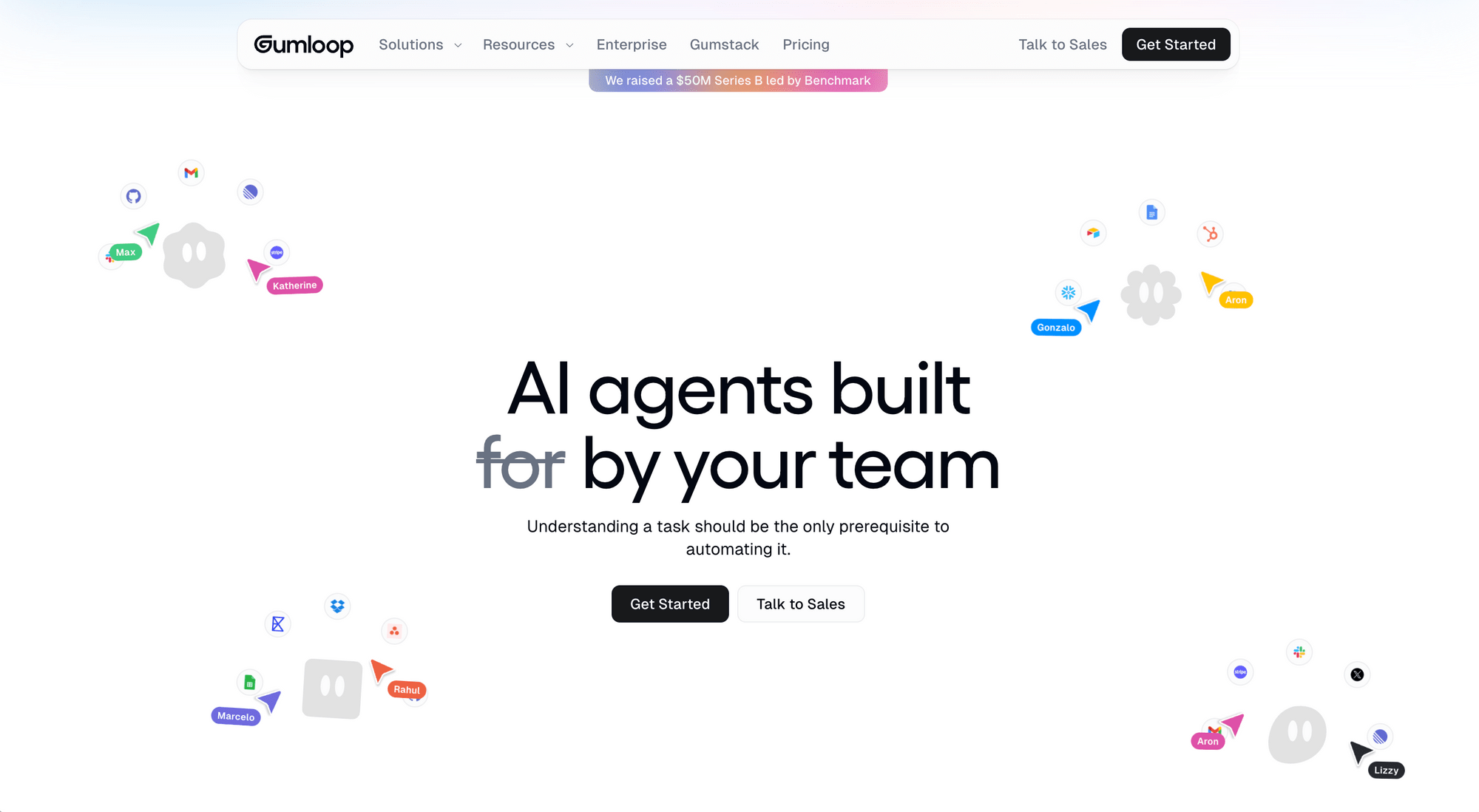
It also ships with an AI assistant, Gummie that can build agents for you from a plain-language description, and includes premium LLM access without needing to bring your own API keys.
Key features:
- Visual, drag-and-drop canvas built AI-first
- Team collaboration on shared workflows, not just single-player builds
- Gummie AI assistant that builds agents for you from a text description
- Premium LLM models included
- MCP integration for connecting to virtually any external tool
9. Relevance AI
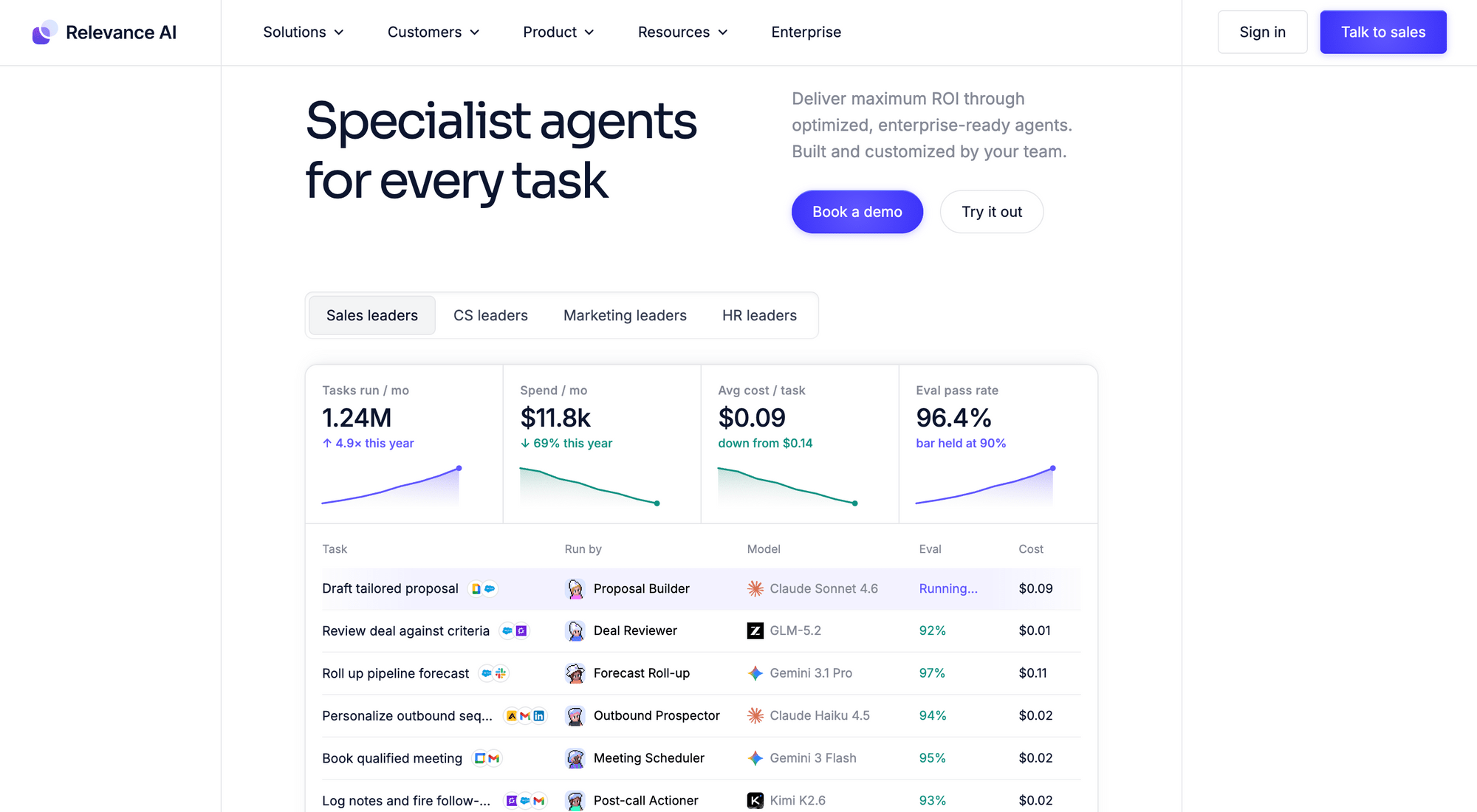
Relevance AI rounds out the list as a no-code platform built for teams that want to move fast without engineering support. It focuses on templated agent workflows and multi-agent teams that non-technical users can configure directly, making it a solid choice for ops and customer-facing teams that need something working quickly.
Key features:
- No-code, templated multi-agent workflows
- Configurable directly by non-technical users
- Multi-agent teams that coordinate on a shared task
- Fast setup aimed at ops and customer-facing teams
- Pre-built templates for common business use cases
Choosing the Right Platform for You
Now that you've seen how each one works, here's how all 9 platforms stack up side by side:
| Platform | Type | Open Source | Pricing | Best For |
|---|---|---|---|---|
| n8n | Visual + code, self-hostable | Fair-code | Free (self-host)/paid cloud | Developers wanting full control |
| Make | No-code/visual | No | Free (1,000 credits/mo), paid plan starts at $9/month for 10k credits | Mid-market ops & marketing teams |
| LangGraph | Developer framework | Yes | Free | Complex, stateful multi-agent workflows |
| CrewAI | Developer framework | Yes | Free (OSS)/paid enterprise tier | Role-based multi-agent crews |
| Microsoft Copilot Studio | No-code/visual, enterprise | No | Copilot licenses + metered credits | Microsoft 365 enterprises |
| Google Gemini Enterprise Agent Platform | Enterprise, RAG-focused | No | Pay-as-you-go | GCP shops needing RAG & compliance |
| OpenAI Agents SDK | Code-first + workspace agents | No | Free SDK, pay per token/tool | Building on OpenAI now that Agent Builder is retiring |
| Gumloop | No-code/visual | No | $37/month (14 day free trial) | Teams collaborating on shared workflows |
| No-code/visual | No-code/visual, enterprise | No | Custom Enterprise plans | Business teams without a developer |
I hope this list helps you find the right AI agent builder for your project. If you want to go deeper on a couple of things mentioned here, check out our articles on 3 Ways to Use AI in Your Make Scenarios and MCP vs. API: What's the Difference!